
What NFC actually is
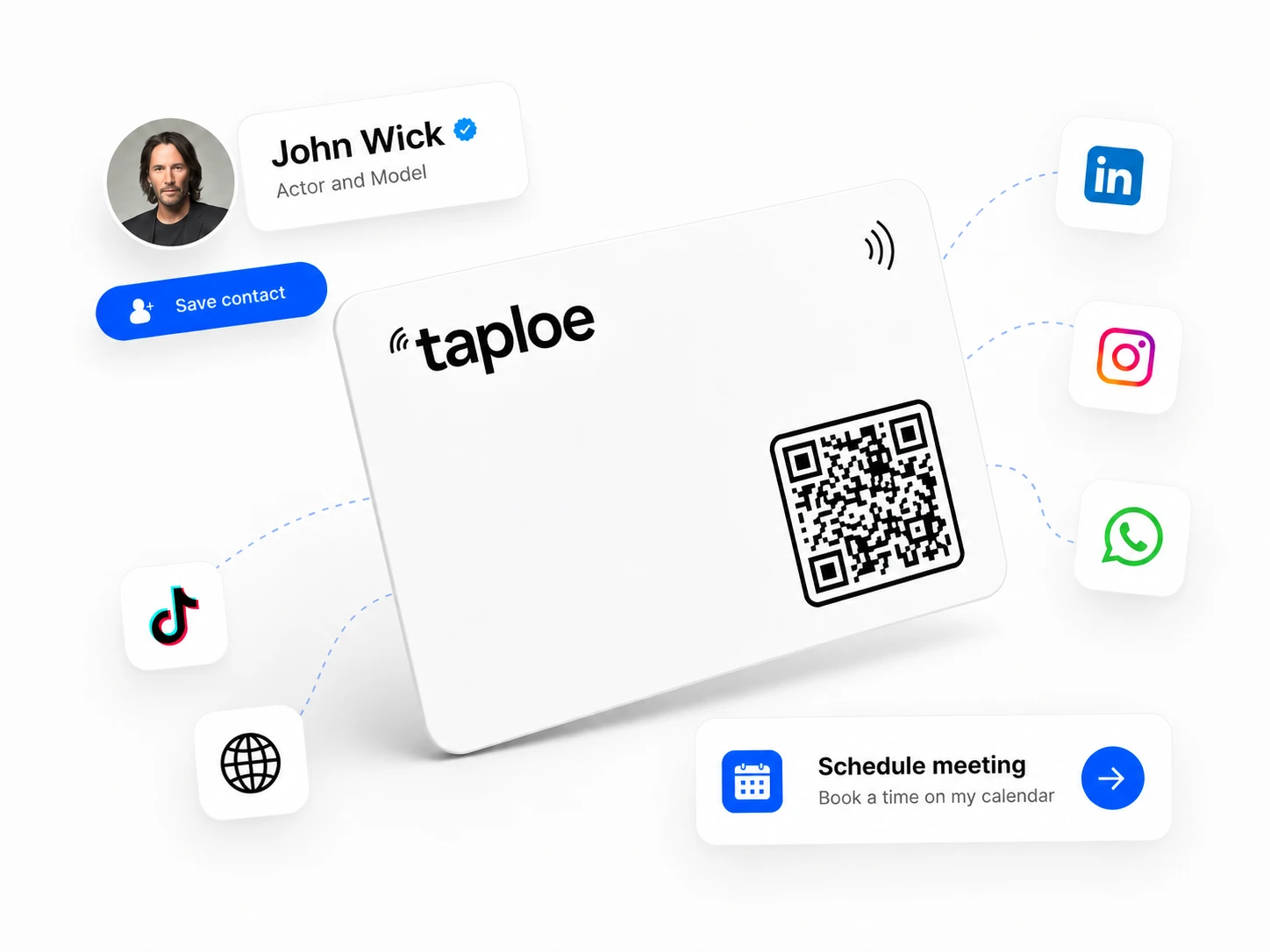
NFC stands for Near Field Communication. It is the same short-range technology used by contactless payments. A small NFC chip inside the card stores a link (a URL). The chip has no battery: it is powered for a moment by the phone that is held close to it.
What happens when someone taps your card
- The person holds the top of their phone against the card.
- The phone reads the link stored in the chip.
- The phone shows a prompt or opens the link directly in the browser.
- Your digital profile loads with your name, phone, email, website and social links, plus a button to save you as a contact.
Because the card only stores a link, you can change the information on your profile at any time without reprinting the card.
Do people need an app?
No. Modern iPhones (from the iPhone XS onward) and most Android phones read NFC tags in the background and open the link in the browser. The person receiving your card does not install anything.
What if their phone does not support NFC?
That is why a good NFC card also prints a QR code. Anyone can point their camera at the QR code and reach the same profile. NFC is the fastest option; QR is the universal backup. Read more in our comparison of NFC vs QR code business cards.
Why professionals switch to NFC cards
- Always up to date: change your job title, phone or links once and every card reflects it.
- More than contact info: link your website, portfolio, booking page, WhatsApp and social profiles.
- Memorable: a tap is more remarkable than a paper card that ends up in a drawer.
- Works for teams: companies can manage profiles for every employee from one place. See Taploe for teams.
Ready to try one?
Explore the custom NFC business card or the premium metal NFC business card, or start with a free digital business card.