
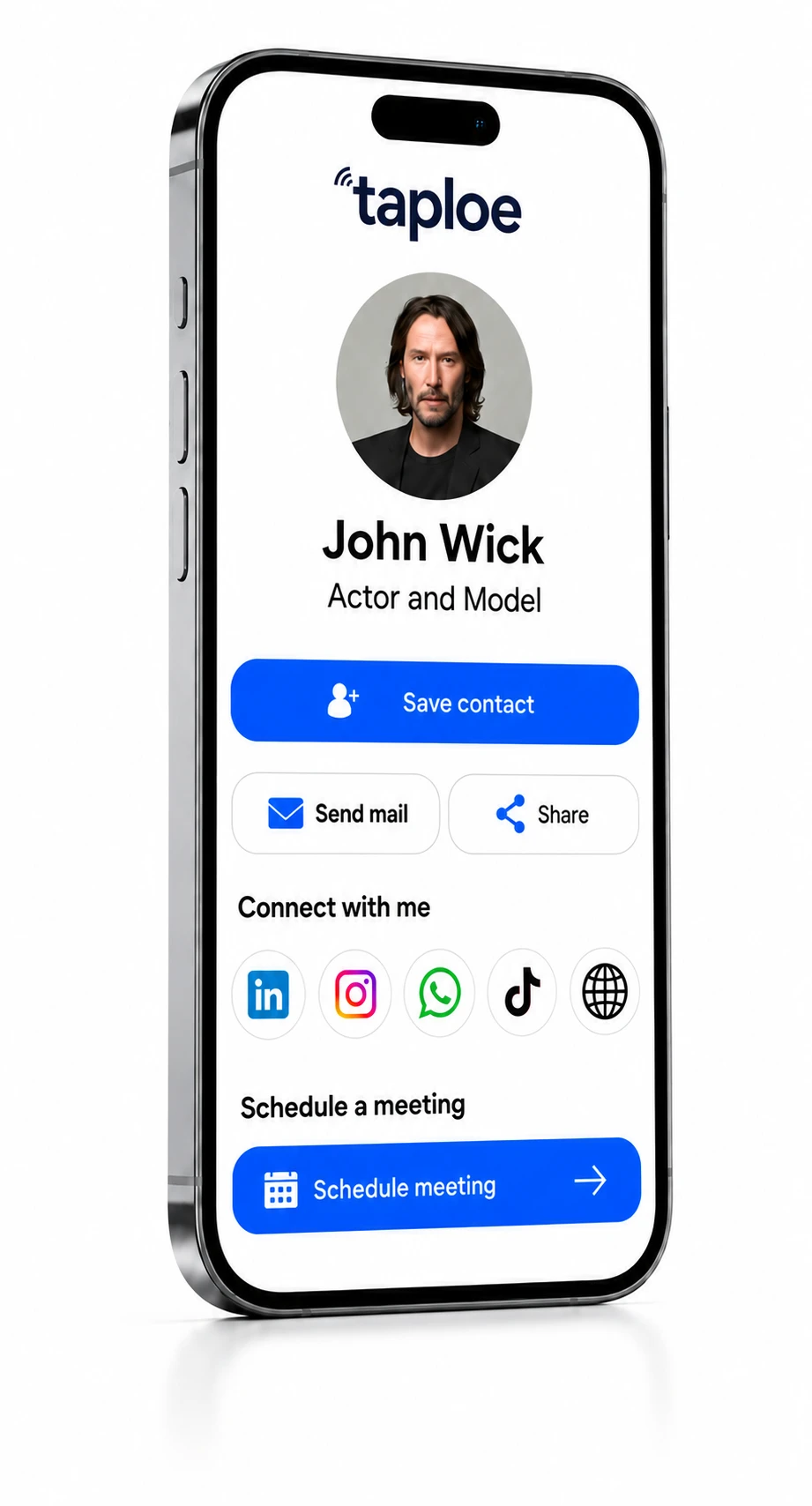
The problem with paper
- Outdated fast. A new phone number or title means a new print run.
- Easy to lose. Most paper cards are discarded or forgotten.
- Manual entry. Someone has to type your details into their phone.
- No follow-up data. You never know who looked at yours.
The strengths of digital
- Always current. Edit once and everything updates.
- Richer. Booking links, videos, social profiles, reviews and more.
- One-tap saving. Contacts land straight in the phone.
- Less waste. No reprints when details change.
Where digital alone falls short
A link is easy to forget. In person, people still expect something to hold. That is why NFC cards work so well: a physical card, a tap to share, and a digital profile behind it. Read NFC vs QR code business cards for how each method works.
Cost comparison
Paper cards are cheap per unit but need reprinting whenever details change. An NFC card costs more up front but is a one-time purchase whose information you can edit indefinitely. See Taploe pricing.
Our recommendation
- Start with a free digital business card.
- Add an NFC card for meetings and events.
- Choose metal if premium presentation matters.